
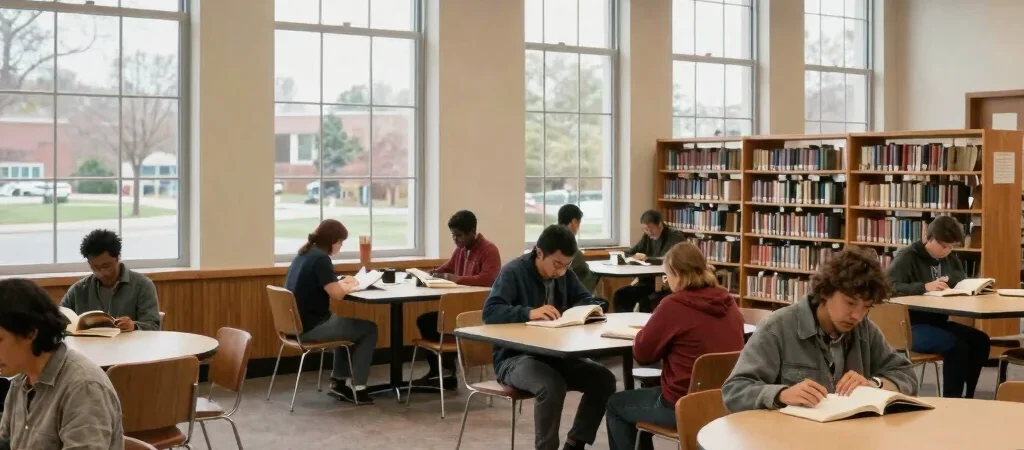
On a Tuesday afternoon, a public library might hold a student at a shared table, a parent steering a stroller toward the children’s shelves, and someone quietly using the computers. Nobody needs to be there for the same reason. That is precisely what makes the library useful: it gives different needs room under one roof.
A room with many purposes
The reading room, meeting space, computer desk, and story-time corner serve different rhythms of the day. A library lets people spend time in a public place without needing to order lunch or explain why they’re there. For anyone looking for a calm place to focus, that simple permission matters.
Follow a question further
A search that starts with a cookbook can lead to a local history shelf; a child’s interest in dinosaurs can turn into a stack about fossils and museums. The shelves make those detours easy, while librarians can help when the first search terms don’t quite fit. Browsing is not wasted time when it reveals a better question.
Notice what your library offers
The next time you visit, look beyond the title you came to borrow. Check the community noticeboard, the upcoming events, or the displays near the entrance, which often reflect local interests and seasons. A library is worth exploring even when you don’t have a particular book in mind.